
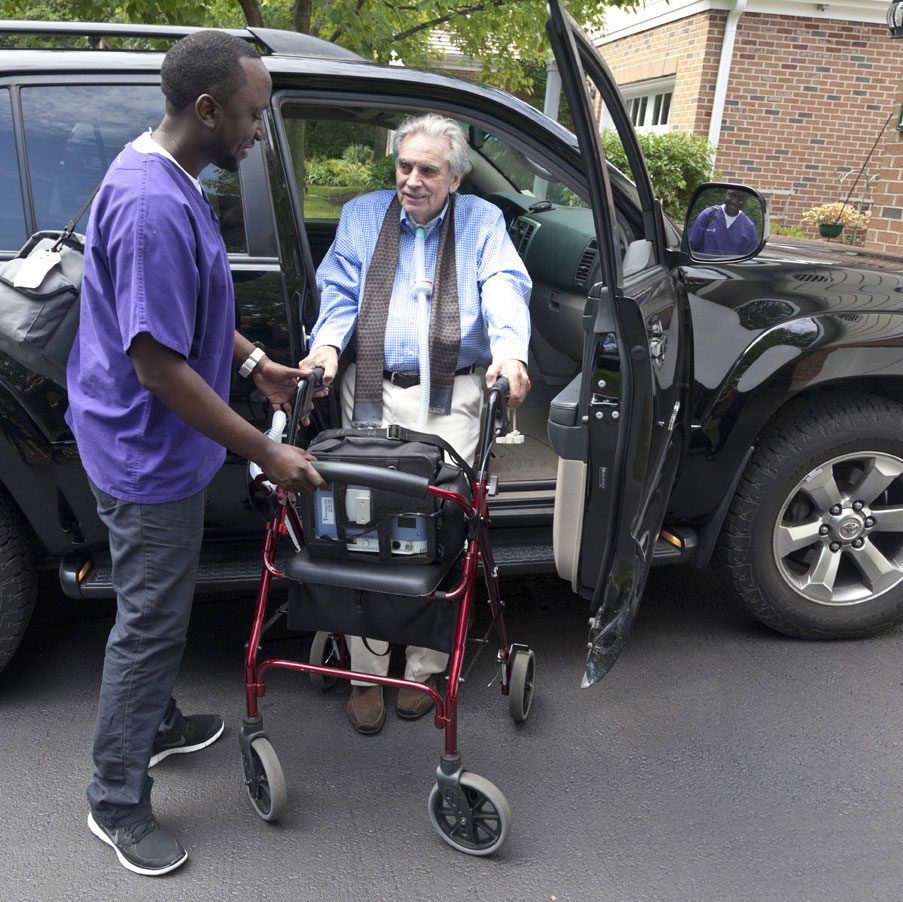
 Our ventilator-dependent patients are gearing up for summer with trips to Disney, outdoor concerts, parks and museums, and more. These trips illustrate how our patients are living full and active lives (inside and outside of the home), and they are a highlight for many of our patients, families, and nurses.
Traveling with our medically complex patients requires planning and preparation. If you’re taking a trip this summer, be sure to contact your home nursing agency, as well as your physician and medical equipment provider. We always recommend patients carry a current prescription for their medical equipment to assist when passing through security check points at the airport and if any medical need arises during travel.
Whether you’re taking a road trip or taking flight this summer, please keep in mind the following travel tips:
Car Travel
- Access to emergency equipment supplies should be within an arm’s reach. (The trunk won’t do!)
- Make sure your equipment is fully charged. If it’s a long drive, be sure to pack car adaptive chargers to recharge the equipment along the way.
- It is the nurse’s responsibility to make sure the patient is safe—secure in a car seat, wheelchair tie-downs, wheelchair seat belts, etc.
- Prepare for the worst, whether it’s getting stuck in traffic, a car accident, or breaking down on the side of the road.
Air Travel
- Call the airline about the medical needs before purchasing the plane ticket. Each airline has separate rules about the type of medical support it allows during a flight; however, most major airlines will accommodate medical equipment needs if you allow them the time to process the request(s).
- Specify what type of seating is required, as well as whether the nurse or family member needs to sit adjacent to them.
- Identify all required medical needs at security checkpoints and the gate. For example, they probably can accommodate your wheelchair, liquids, etc.
- Each airline has its own policy regarding travel with oxygen and the FAA has specific travel requirements for battery duration on ventilators.
- Anticipate multiple transfers out of the wheelchair when boarding your flight. For example, you may need to transfer to a special wheelchair that can fit in between the airplane’s aisles. In most cases, your personal wheelchair can only be taken to the end of the boarding bridge.
- Do not stow or check your emergency supplies. They should always be within arm’s reach (under your seat, with you, etc.)
- If specialized oxygen tanks are needed per the airline, work with your medical equipment provider in advance to ensure you have the acceptable equipment.
- Please remember that the air on board the plane is extremely dry; be prepared to provide additional humidity.
- Plan for delays and carry extra supplies to ensure sufficient life-saving equipment and supplies are available.
These are just a few of our travel trips! Where are you going with your patient this summer? And how are you planning to prepare?